Hista Kitchen · Recipe

Roasted Red Pepper Pesto

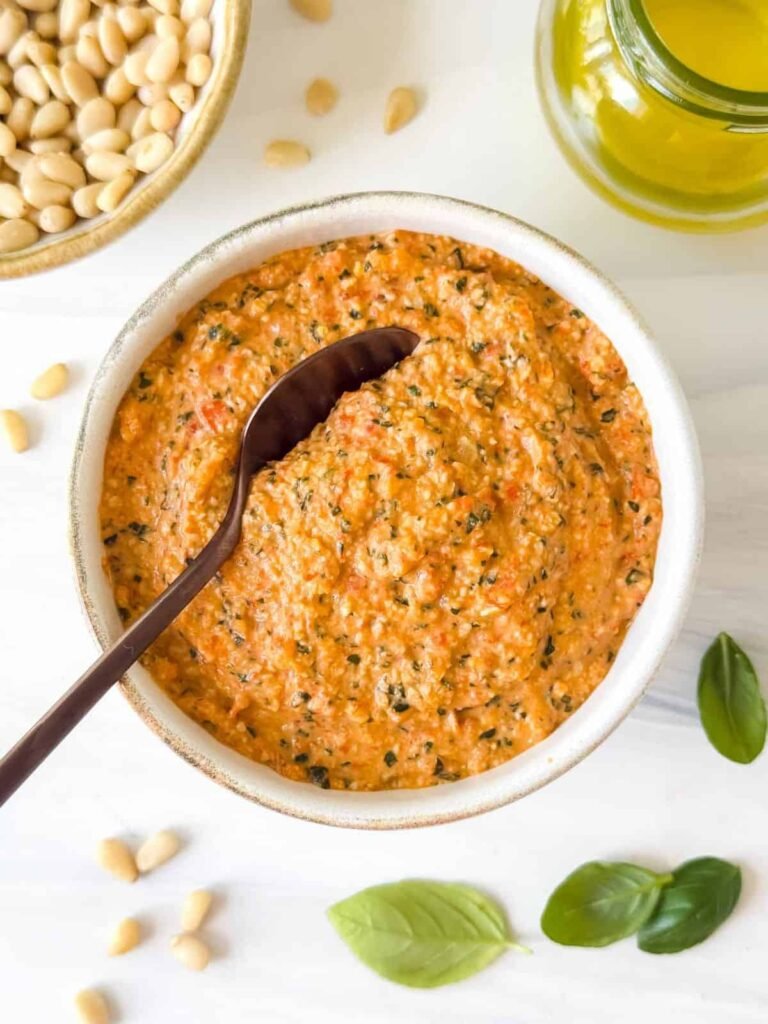
Roasted red peppers, toasted pumpkin seeds, fresh basil and garlic come together in a creamy, flavorful pesto that's easy to serve with pasta, rice or vegetables.

  • Prep10 min
  • Cook30 min
  • Serves4
Jump to recipe
Hista Kitchen recipe

Ingredients and instructions

Prep 10 minCook 30 minTotal 40 minServings 4

Ingredients

Method

  1. Preheat the oven to 400°F (200°C). Line a baking sheet with parchment paper.
  2. Halve the red bell peppers and remove their stems and seeds. Coat with 1 tablespoon of olive oil. Place on the baking sheet and roast for 20–25 minutes, until softened and lightly charred.
  3. While the peppers roast, place the pumpkin seeds in a dry skillet over medium-low heat. Toast for 3–4 minutes, stirring frequently. Remove from the heat and allow to cool.
  4. Allow the roasted peppers to cool for about 5 minutes. Peel away any loose skin if desired.
  5. Add the roasted peppers, toasted pumpkin seeds, basil leaves, garlic, remaining 2 tablespoons of olive oil and salt to a food processor. Add the apple cider vinegar if using.
  6. Blend until creamy or slightly textured, according to preference. Add up to 1 tablespoon of water if needed to loosen the mixture. Serve with your chosen dish.
Storage & handling: Cool and refrigerate promptly in a covered food-safe container. Freeze individual portions if not using promptly. Storage duration and ingredient tolerance require separate consideration; refrigeration or freezing does not guarantee low histamine levels.
Additional cooking notes: For a smoother sauce, blend the ingredients longer. For a thicker pesto, omit the optional water. The pumpkin seeds should be toasted gently to avoid burning.

Food choices and tolerance vary. This recipe is general cooking information, not individualized medical advice or a guarantee of suitability.

About this recipe

This roasted red pepper pesto uses pumpkin seeds instead of traditional pine nuts. Roasting the peppers gives the sauce a mellow, slightly sweet flavor, while the seeds provide texture and body.

Fresh basil adds an herbal note, and olive oil helps bring everything together. Adjust the texture by processing briefly for a chunkier pesto or blending longer for a smoother sauce.

The finished pesto can be used as a pasta sauce, a vegetable topping or a spread. Individual ingredient tolerance and dietary requirements should be assessed separately.